Jacó, Costa Rica — A Wildlife Paradise Right Outside Your Door
Most people come to Jacó for the beach. The surf, the sunshine, the Pacific horizon. What surprises almost everyone — especially first-time visitors and new property owners — is what they find the moment they look away from the ocean.
A troop of white-faced capuchin monkeys raiding a mango tree on a residential street. A three-toed sloth hanging motionless in the cecropia tree by the road. A scarlet macaw pair screaming past in a flash of red and green. A humpback whale breaching on the horizon during a morning surf session.
Jacó is not just one of Costa Rica's best real estate markets. It is one of the most biodiverse wildlife destinations on the planet — and remarkably, the vast majority of what makes this place extraordinary is visible within minutes of downtown, at no cost, on any given day of the year.
For buyers considering property in the Central Pacific, this is far more than a lifestyle bonus. It is a fundamental part of what makes Jacó uniquely, irreplaceably valuable — and why the people who move here almost never leave.
Four Monkey Species — Minutes from Downtown
This is the detail that stops people cold when we mention it: Jacó and its immediate surroundings are home to four distinct species of monkey, all of which can be spotted within a few minutes of the town center. This level of primate diversity in an accessible, developed beach town is almost unheard of anywhere in the world.
White-Faced Capuchin Monkeys
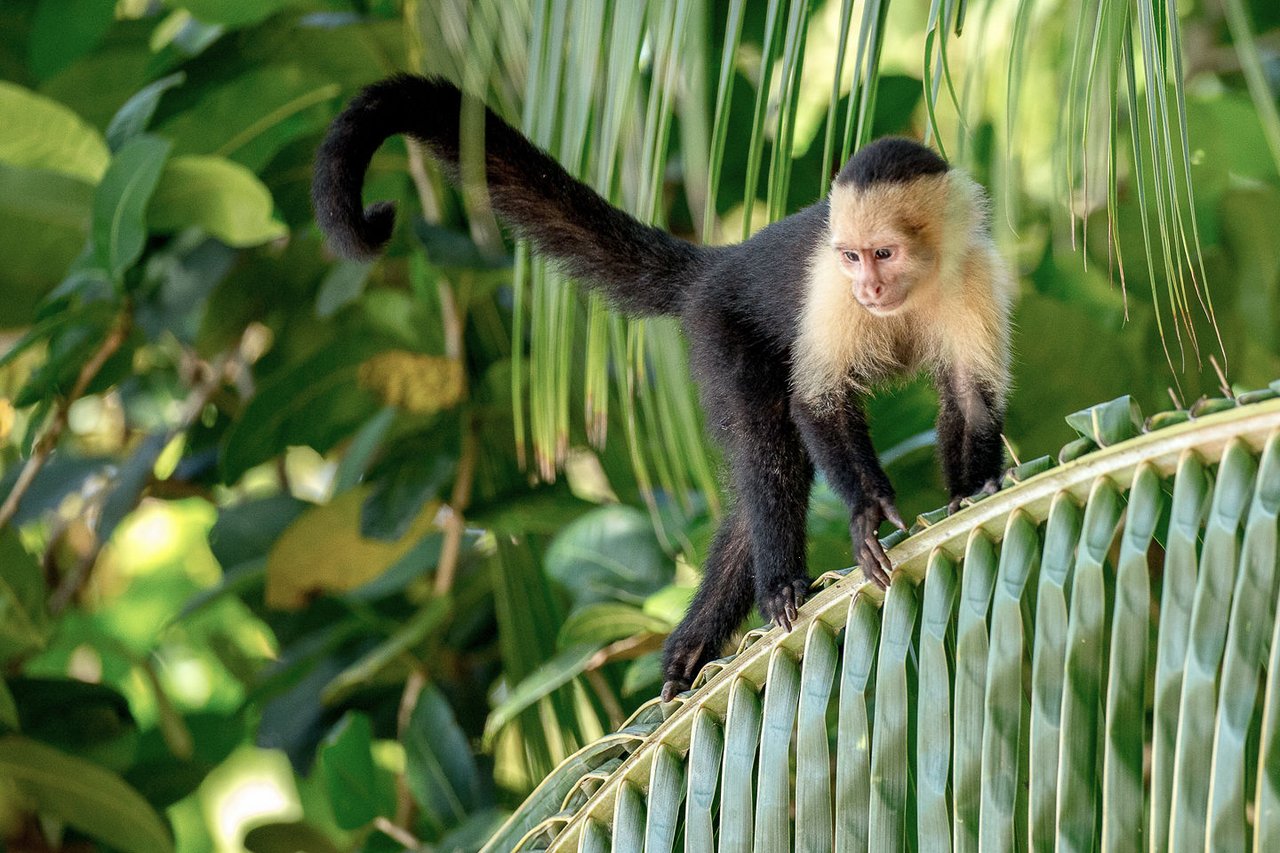
The most commonly seen monkey in Jacó proper. Capuchins are highly intelligent, acrobatic, and completely at home in the trees that line Jacó's streets, parks, and residential gardens. They travel in troops of 10 to 20, move noisily through the canopy, and have zero fear of people. Watching a capuchin troop pass through your garden is a daily occurrence for many Jacó homeowners — and never stops being extraordinary.
Howler Monkeys (Congos)
You often hear them before you see them. The howler monkey's call — a deep, resonant roar that carries for miles through the jungle — is one of the iconic sounds of the Costa Rican morning. Howlers are large, slow-moving, and spend most of their time high in the canopy feeding on leaves. Their distinctive silhouette against a Jacó sunset is one of those images that stays with you forever.
Spider Monkeys
Spider monkeys are the acrobats of the primate world — long-limbed, fast-moving, and spectacular to watch as they swing through the upper canopy using their prehensile tails as a fifth limb. They are shyer than capuchins but present in the forested areas surrounding Jacó and along the river corridors. Spider monkey sightings are a genuine wildlife highlight — they are increasingly rare in many parts of Central America, which makes the density around Jacó particularly special.
Tití Monkeys (Squirrel Monkeys)
The smallest and arguably most charming of the four. Tití monkeys travel in large, fast-moving troops and are found in forested patches around the Central Pacific — including areas close to Jacó. Costa Rica's squirrel monkey (Saimiri oerstedii) is an endemic species found only on the Pacific coast of Costa Rica and a small area of Panama, making every sighting genuinely significant. They are listed as vulnerable, which makes the habitat around Jacó an important refuge.
The Big Names — Animals People Travel the World to See
Ask wildlife enthusiasts what brings them to Costa Rica and you'll hear the same names repeated: sloths, toucans, scarlet macaws. These are bucket-list animals — species that people pay thousands of dollars in guided tours and remote lodge fees to catch a glimpse of. In and around Jacó, they are part of everyday life.
Sloths
Three-toed sloths are permanent residents in the trees of Jacó and the surrounding areas. They are surprisingly easy to spot once you know what to look for — a rounded mass of grey-brown fur hanging motionless in a cecropia or guarumo tree, moving only to reach the next branch or stretch in the morning sun. Jacó homeowners routinely find sloths in their garden trees. There are few things more disarming than making eye contact with a sloth from your terrace.
Scarlet Macaws
One of the most visually stunning birds on earth — and Jacó sits within the heart of their territory. The scarlet macaw population of the Central Pacific, centered on the Carara National Park corridor just north of Jacó, is one of the largest and most accessible in all of Costa Rica. Macaws typically fly in pairs, and the sight of a scarlet macaw couple gliding against a blue Pacific sky above your property is something that never loses its power. They can be seen daily — morning and evening flights are particularly spectacular.
Toucans
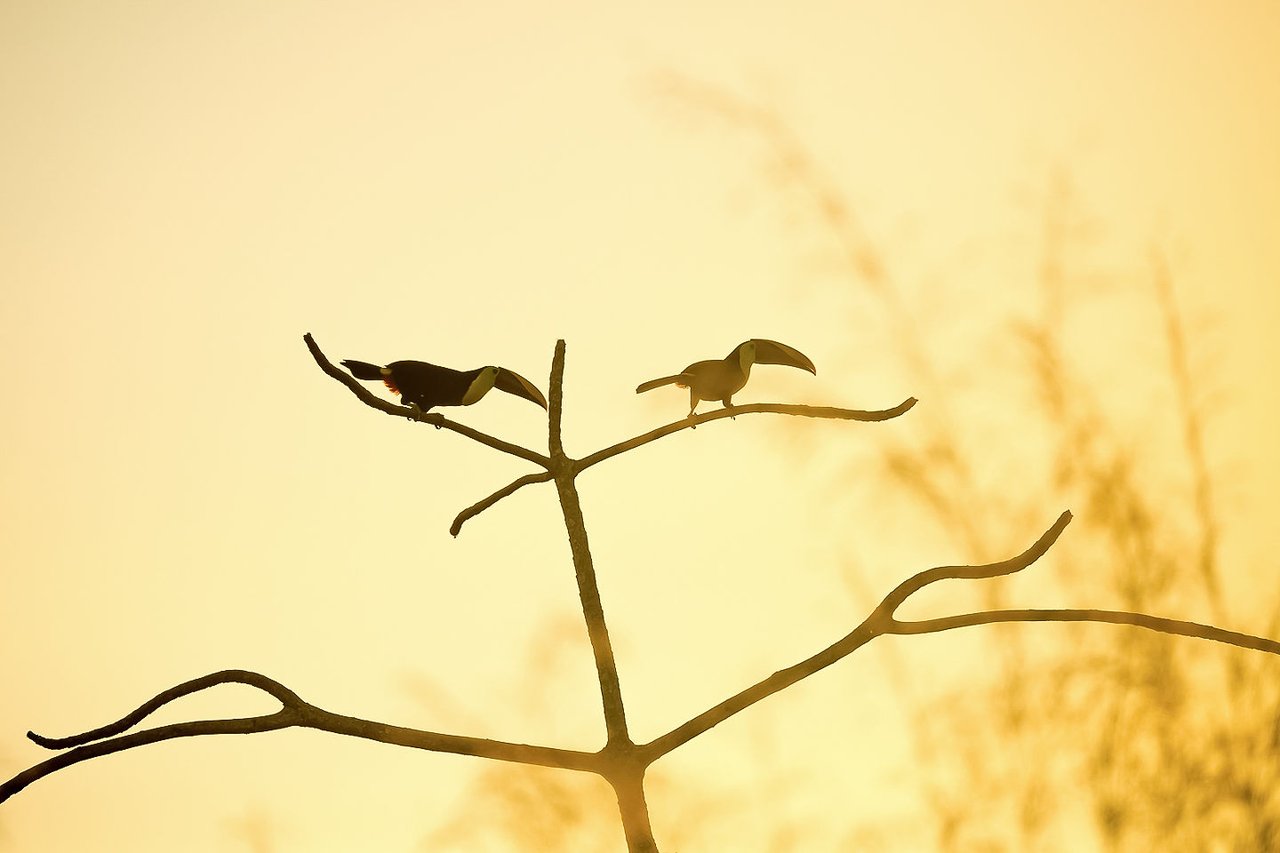
Several toucan species inhabit the Jacó area, including the striking Chestnut-mandibled Toucan and the smaller Fiery-billed Aracari. Toucans are one of those birds that seem almost too exotic to be real — their oversized, vibrantly colored bills and loud calls make them unmistakable. For most international visitors, seeing a toucan in the wild is a once-in-a-lifetime experience. For Jacó residents, they are regular garden visitors.
Hummingbirds
Costa Rica is home to over 50 species of hummingbird, and the Central Pacific region hosts a remarkable variety. Hang a simple feeder in your garden and within days you'll have multiple species visiting daily — violet sabrewings, long-billed hermits, purple-crowned fairies, and rufous-tailed hummingbirds among them. Birdwatchers from around the world pay premium prices for guided hummingbird tours in remote lodges. In Jacó, you put up a feeder and sit on your terrace.
Birdwatcher's Heaven — Species People Pay Fortunes to Find Elsewhere
The Jacó and Central Pacific region is one of the premier birdwatching destinations in the Western Hemisphere — a fact that the international birding community has known for years, but that most real estate buyers are completely unaware of.
The proximity to Carara National Park — a UNESCO-recognized transitional forest zone where the dry forests of the northwest meet the humid rainforests of the south — creates extraordinary bird diversity. Over 400 species have been recorded in and around the park and the Jacó area, including:
- Scarlet Macaws — one of the most reliable viewing spots in all of Costa Rica
- Roseate Spoonbills — breathtaking pink wading birds found in coastal wetlands
- Boat-billed Herons — nocturnal, unusual, highly sought-after by birders
- Turquoise Cotingas — electric blue, one of the most beautiful birds in the Americas
- Spectacled Owls — large, striking, and found in forested areas near Jacó
- Yellow-billed Cotinga — endemic and endangered, found in a tiny range that includes this area
- Riverside Wren — a Costa Rican endemic virtually guaranteed at the Tárcoles River
Serious birders pay $500 to $1,000 per day for guided tours to remote lodges in the hope of spotting a fraction of what is reliably visible within a 30-minute drive of downtown Jacó. For property owners here, this is simply Tuesday morning.
The Tárcoles River — Crocodiles and World-Class Birding
Fifteen minutes north of Jacó, the Tárcoles River meets the Pacific — and it is one of the most dramatic wildlife viewing locations in all of Central America. The river supports one of the highest concentrations of American crocodiles in the world, with large individuals regularly visible from the famous Crocodile Bridge on the Costanera highway.
These are not small animals. Tárcoles crocodiles commonly exceed 3 to 4 meters in length, and the largest individuals approach 5 meters. The sight of dozens of these ancient reptiles basking on the riverbanks is genuinely primordial — and completely accessible as a 30-minute round trip from Jacó.
The Tárcoles estuary is also one of the most productive birding sites in the country, with large populations of herons, egrets, roseate spoonbills, wood storks, and the endemic Riverside Wren visible on any visit.
Ocean Wildlife — Whales, Dolphins, and Manta Rays
The Pacific waters off Jacó are not just for surfing. The Central Pacific is one of the best marine wildlife destinations in the Americas.
Humpback Whales
This is one of the most extraordinary facts about Jacó that almost nobody outside the wildlife community knows: the waters off Costa Rica's Central Pacific coast receive humpback whale visits for approximately 8 months of the year — one of the longest humpback seasons anywhere in the world. The region is visited by both northern and southern hemisphere humpback populations, creating a near year-round season that is genuinely unique globally. Whale watching tours operate out of Jacó and Herradura regularly from July through March.
Dolphins
Multiple dolphin species inhabit the waters off Jacó year-round, including bottlenose, spinner, and spotted dolphins. Dolphin encounters on boat tours are common to the point of being nearly guaranteed. Spinner dolphins, known for their acrobatic leaps and spins, are a particular highlight.
Manta Rays
The waters around the Central Pacific, including offshore areas accessible by boat from Jacó and the Los Sueños marina, are home to oceanic manta rays. These enormous, graceful animals — with wingspans reaching up to 5 meters — are encountered on dive and snorkel trips and are a spectacular highlight for ocean-oriented buyers.
Sea Turtles
Multiple sea turtle species nest on the beaches of the Central Pacific, including olive ridley and leatherback turtles. Jacó is home to a sea turtle hatchery — a local conservation initiative that collects and protects turtle eggs from the beaches, incubates them safely, and releases hatchlings into the ocean. Participating in or simply witnessing a sea turtle release is one of the most moving wildlife experiences available anywhere in Costa Rica — and it happens right here in Jacó. For families and conservation-minded buyers, this is the kind of thing that defines a place.
Felines — The Jungle Cats of the Central Pacific
For many wildlife enthusiasts, the presence of wild felines is the ultimate indicator of a healthy, intact ecosystem. The forested areas surrounding Jacó and the Central Pacific support several wild cat species, including:
- Jaguarundi — a sleek, otter-like small cat sometimes spotted near forest edges and rivers
- Ocelot — beautifully spotted, primarily nocturnal, present in forested areas throughout the region
- Puma — the largest feline of the area, wide-ranging, occasionally photographed by camera traps in the hills above Jacó
Sightings are not everyday occurrences — these animals are shy and largely nocturnal. But their presence confirms what the biodiversity data already shows: the ecosystems around Jacó are among the most intact and species-rich in all of Central America.
Surfing for Every Level — 365 Days a Year
While this guide focuses on wildlife, Jacó's surf deserves a note in the context of what makes this destination uniquely complete. Unlike Playa Hermosa — which offers world-class but powerful waves best suited to experienced and professional surfers — Jacó's beach break offers waves for every skill level, from absolute beginners taking their first lesson to professionals who use Jacó as a training base for competitions.
And crucially, both Jacó and Playa Hermosa offer surfable waves 365 days a year — something that cannot be said of most surf destinations in Costa Rica or anywhere in the world. For buyers who surf, or who want surf access as part of their lifestyle or rental offering, this combination of accessibility and year-round consistency is genuinely rare.
Why This Matters for Property Buyers
Everything described in this article is available to property owners in Jacó every single day — not as a paid tour, not as a scheduled excursion, but as the fabric of daily life.
This biodiversity has direct and measurable implications for property value and rental performance:
Vacation rental appeal. Guests who come to Costa Rica specifically for wildlife — and there are millions of them — are drawn to locations where extraordinary encounters are guaranteed rather than hoped for. Well-marketed Jacó properties that lead with wildlife and nature consistently outperform comparable properties that lead only with beach access.
Long-term lifestyle value. Buyers who purchase in Jacó for lifestyle reasons consistently report that the wildlife and natural environment are among the top factors that make them certain they made the right decision. It is the difference between a beautiful beach town and a place that genuinely feels alive.
Conservation protections. The extraordinary biodiversity of the Central Pacific region — and the presence of endemic and protected species — means that the natural environment here carries significant legal protection. The forests, river corridors, and coastal habitats that produce the wildlife experiences described in this article are not going to be developed away. This protects the character of the area and the value of the properties within it for the long term.
Experience It for Yourself
The best way to understand what Jacó's wildlife and natural environment means as a backdrop for daily life is to come and spend time here. We regularly arrange property visits that include time in the field — not as a distraction from the real estate, but as an essential part of understanding what you're actually buying into.
Daphne and Brooke Rochester at Pacific Properties have lived and worked in this environment for over 30 years. The monkeys in our garden, the macaws overhead, the sea turtle releases on the beach — these are not selling points for us. They are simply home. And we'd love to show you why.
📞 Call or WhatsApp Brooke: (506) 8718-5591 📞 Call or WhatsApp Daphne: (506) 6286-7556 📧 Email Brooke: [email protected] 📧 Email Daphne: [email protected]
Browse properties in Jacó and the Central Pacific →
Read our complete guide to buying property in Costa Rica as a foreigner →
Explore the Playa Hermosa neighborhood guide →
Pacific Properties Luxury Real Estate — Pastor Díaz Ave, Jacó, Puntarenas, Costa Rica. Specialists in Jacó, Playa Hermosa, Herradura, Esterillos, and the Central Pacific coast.
Wildlife sightings are subject to seasonal variation and individual circumstances. The species and experiences described in this article reflect the genuine biodiversity of the Jacó and Central Pacific region based on decades of local experience.