How to Buy Property in Costa Rica as a Foreigner — Complete 2026 Guide
Costa Rica has long captured the imagination of international buyers — turquoise Pacific waters, lush rainforests, a stable democracy, and a cost of living that makes even modest budgets feel generous. But when it comes to actually buying property in Costa Rica as a foreigner, most people have the same first question: Can I even do this?
The answer is a resounding yes — and the process is more straightforward than you might expect. Here's everything you need to know.
Can Foreigners Own Property in Costa Rica?
Yes, absolutely. Costa Rica has some of the most favorable foreign property ownership laws in all of Latin America. Under Costa Rican law, foreigners have the same property ownership rights as citizens. You do not need to be a resident, hold a work permit, or meet any minimum investment threshold to purchase and own titled property outright in your own name.
This is one of the primary reasons why thousands of North Americans, Europeans, and international investors choose Costa Rica over other destinations in the region. Countries like Mexico and Panama have restrictions on beachfront ownership for foreigners. Costa Rica, by contrast, allows you to hold a direct title and Jaco is one of the areas in the country that does!.
The Two Types of Property You Need to Know About
Before you start browsing listings, there's one critical legal distinction every foreign buyer must understand: the difference between titled property and concession land (zona marítimo terrestre).
Titled (Fee Simple) Property
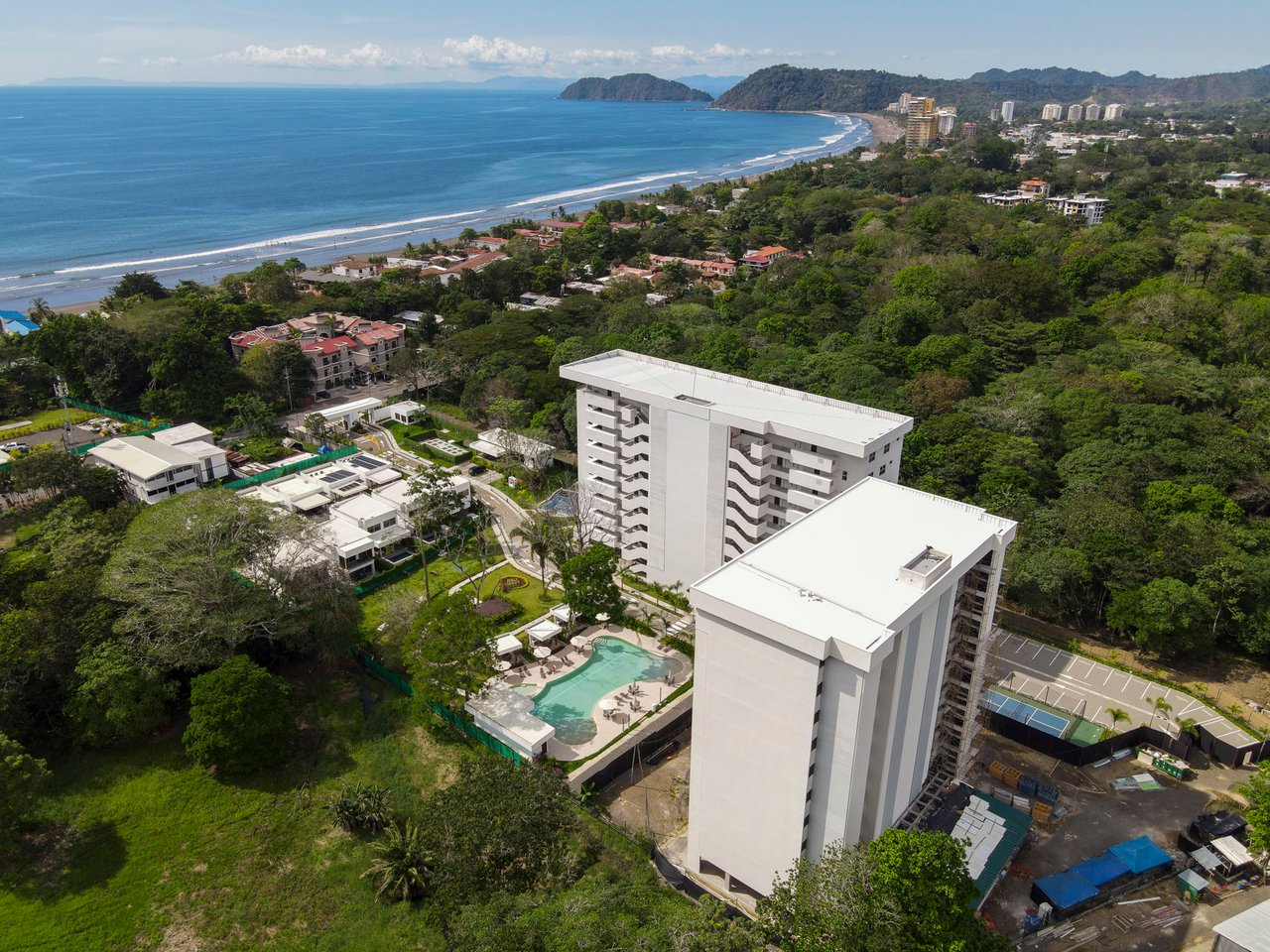
This is the gold standard. Titled property in Costa Rica is registered with the National Registry (Registro Nacional) and gives the owner full, transferable rights. You can buy, sell, mortgage, or inherit it just as you would property anywhere in the world. The vast majority of homes, condos, and lots in Jacó, Playa Hermosa, Herradura, and the surrounding Central Pacific region are fully titled.
When searching for property in Jacó Costa Rica, always confirm a property is fully titled as your first step.
Concession Land — The Maritime Zone (Zona Marítimo Terrestre)
Here's where many buyers get tripped up. In Costa Rica, the first 50 meters from the high-tide line on any ocean beach is public land — no one can own it. The next 150 meters (the "zona marítimo terrestre") is government-controlled concession land. You can hold a concession license to use it, but you do not own the land itself.
Concession properties require additional due diligence:
- Concessions must be held through a Costa Rican corporation if you haven't lived in the country for at least 5 years
- Concession licenses expire and must be renewed
- Municipalities control and regulate concessions differently by region
- Not all concessions are legally transferable
This doesn't mean you should avoid beachfront property — some of the most extraordinary homes in the country sit on concession land. It means you must have a qualified Costa Rican real estate attorney review the concession's status thoroughly before proceeding.
Pacific Properties tip: Daphne and Brooke Rochester have navigated beachfront transactions in the Central Pacific for over 30 years. Before you fall in love with a beachfront property, let us walk you through the legal landscape first — it can save you significant time and money.
Step-by-Step: How the Buying Process Works in Costa Rica
Step 1 — Define Your Goals and Budget
Are you buying a vacation home, a primary residence, a rental investment, or a development opportunity? Each goal points to different property types, locations, and price ranges. The Central Pacific region — covering Jacó, Playa Hermosa, Herradura, Esterillos, and Tárcoles — offers everything from $150,000 condos to multi-million-dollar beachfront estates.
Be clear on:
- Your maximum purchase budget
- Whether you plan to rent the property when not using it
- Your timeline (buying in 6 months vs. 2 years changes your strategy)
- Whether you want a move-in-ready property or are open to construction/remodel
Step 2 — Choose Your Location
The Central Pacific is Costa Rica's most established and accessible real estate market, sitting just 90 minutes from Juan Santamaría International Airport in San José. Key areas include:
- Jacó Beach — Costa Rica's most developed beach town, with restaurants, nightlife, surf, and strong short-term rental demand
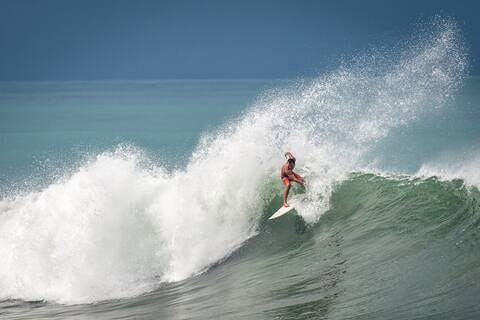
- Playa Hermosa — 5km south of Jacó, quieter, world-class surf, now a designated World Surfing Reserve; strong appreciation
- Herradura / Los Sueños — Upscale marina community, sport fishing, golf, one of the region's most prestigious addresses
- Esterillos — A quieter alternative south of Jacó with beautiful beaches and lower price points
- Tárcoles — Nature-forward, close to Carara National Park, emerging market with excellent value
Step 3 — Work With a Local Real Estate Expert
Costa Rica does not have an official MLS (Multiple Listing System). This means listings are fragmented across agencies, private sellers, and informal networks. Working with an established local agent gives you access to inventory that never appears online — including pocket listings, pre-market deals, and off-market estates.
Note that real estate agents in Costa Rica are not required to be licensed, which means the market is unregulated. Choose an agent with a verifiable track record, deep community ties, and decades of local experience. There is no substitute for someone who has been closing transactions in the area for years and knows the market, the developers, the attorneys, and the local government offices personally.
Step 4 — Hire a Qualified Costa Rican Real Estate Attorney
This is not optional. Every real estate transaction in Costa Rica requires a notary public (who is also an attorney) to draft and register the deed. Your attorney will:
- Conduct a full title search through the National Registry
- Verify there are no liens, encumbrances, or legal disputes on the property
- Review the concession status if applicable
- Draft or review the purchase agreement (Opción de Compra)
- Handle the transfer of funds and registration of the new deed
Attorney fees in Costa Rica are regulated by the Bar Association and are typically 1.25% to 1.5% of the purchase price for the buyer's legal representation. Never skip this step to save money.
Step 5 — Make an Offer and Sign a Purchase Agreement
Once you've identified the right property, your agent will help you negotiate and structure an offer. If accepted, you'll sign a formal Opción de Compra (purchase option/agreement), which locks in the price and terms and typically involves a deposit of 10% of the purchase price.
This deposit is held in escrow — always use a reputable escrow company or your attorney's trust account, never wire funds directly to a seller.
Step 6 — Due Diligence Period
Between signing the purchase agreement and closing, your attorney will conduct due diligence. This typically takes 30 to 60 days and covers:
- Full title search and lien verification
- Survey confirmation (catastro review)
- Zoning and land use verification
- Concession review if applicable
- HOA review for condos and gated communities
- Environmental and construction permit history
Do not rush this phase. A thorough due diligence process is what separates a smooth transaction from a costly dispute.
Step 7 — Closing
At closing, your attorney transfers the remaining balance to the seller (typically via escrow), and the new deed is registered in the National Registry in your name or your corporation's name. The entire process from offer to closing typically takes 45 to 90 days for a straightforward titled property.
What Does It Cost to Buy Property in Costa Rica?
Understanding your total acquisition cost — not just the list price — is essential for budgeting.
| Cost Item | Typical Amount |
|---|---|
| Purchase price | As negotiated |
| Transfer tax | 1.5% of registered value |
| Stamps & registry fees | ~0.65% of registered value |
| Buyer's attorney fee | 1.25%–1.5% of purchase price |
| Escrow fee | $500–$1,500 (flat or % based) |
| Total closing costs (approx.) | 3–4% of purchase price |
For example: On a $400,000 property, you should budget approximately $12,000–$16,000 in closing costs on top of the purchase price.
Do You Need to Form a Corporation?
Many foreign buyers in Costa Rica purchase property through a Sociedad Anónima (S.A.) or Sociedad de Responsabilidad Limitada (S.R.L.) — Costa Rican corporations. This is not legally required for most titled properties, but it offers several advantages:
- Simplifies future transfers (you transfer corporation shares rather than re-registering the deed)
- Can provide liability protection
- Required for non-residents holding concession land
- Can be useful for estate planning and succession
Corporation formation typically costs $800–$1,500 through a local attorney and has an annual government tax of approximately $200.
Can You Get a Mortgage in Costa Rica?
Financing options for foreign buyers are limited compared to North America or Europe. Costa Rican banks generally require:
- Legal residency status
- Several years of Costa Rican banking history
- Significant documentation of income and assets
Most international buyers purchase in cash or use financing from their home country (home equity line of credit, self-directed IRA, etc.). Developer financing is available on some new construction projects. Pacific Properties can connect you with trusted international financing resources based on your specific situation.
Taxes and Ongoing Costs of Property Ownership
Owning property in Costa Rica comes with ongoing costs that are generally very low compared to North America:
- Annual property tax (impuesto de bienes inmuebles): 0.25% of the registered property value per year. On a $400,000 home, this is approximately $1,000/year.
- Luxury home tax (Impuesto Solidario): Applies to properties registered at ₡133 million colones (~$250,000 USD) or more. Rates are progressive from 0.25% to 0.55%.
- HOA fees: Vary by community. Gated communities and condo complexes in Jacó typically run $200–$600/month.
- Property management: If you rent your property, expect 20–25% of rental income for full management services.
Is Costa Rica Real Estate a Good Investment?
The Central Pacific coast has seen consistent appreciation over the past two decades, driven by growing international demand, improving infrastructure, and the natural scarcity of well-located beachfront and ocean-view properties. Jacó in particular benefits from its accessibility — just 90 minutes from the international airport — which supports a robust short-term rental market.
Key investment indicators for Jacó and the Central Pacific in 2026:
- Short-term rental yields of 6–10% on well-located vacation properties
- Property appreciation averaging 5–8% annually in prime locations over the past five years
- Growing demand from remote workers, retirees, and high-net-worth investors relocating from North America
- Infrastructure improvements including road upgrades, new hotel brands entering the market, and marina expansion at Los Sueños
Frequently Asked Questions
Do I need to live in Costa Rica to buy property? No. Non-residents can purchase and own titled property with full legal rights.
Can I rent out my property on Airbnb? Yes. Short-term vacation rentals are legal and common in Jacó and the Central Pacific. You'll need to register as a business with the government and pay the appropriate taxes.
Is it safe to buy property in Costa Rica? With proper due diligence and a qualified attorney, real estate transactions in Costa Rica are safe and legally sound. The key is working with trusted, experienced professionals — not cutting corners on legal review or property inspection.
How long does it take to close? Typically 45–90 days from offer to registered deed, depending on the complexity of the transaction.
What happens to my property when I die? Costa Rica recognizes foreign wills, but having a local will or holding property through a corporation significantly simplifies succession. Your attorney can advise on the best structure for your situation.
Ready to Start Your Property Search in Costa Rica?
Buying property in Costa Rica as a foreigner is one of the most rewarding decisions our clients have ever made — but it requires the right guidance from people who truly know the market.
Daphne and Brooke Rochester at Pacific Properties have helped hundreds of international buyers navigate the Jacó and Central Pacific market over the past 30+ years. From your first property search to the day you get your keys, we're with you every step of the way — including connecting you with trusted attorneys, surveyors, and property managers.
📞 Call or WhatsApp Brooke: (506) 8718-5591 📞 Call or WhatsApp Daphne: (506) 6286-7556 📧 Email us: [email protected]
Or browse current listings in Jacó and the Central Pacific →
Pacific Properties Luxury Real Estate — Pastor Díaz Ave, Jacó, Puntarenas, Costa Rica
All information in this guide is intended as general educational content and does not constitute legal or financial advice. Always consult a qualified Costa Rican attorney before proceeding with any real estate transaction.