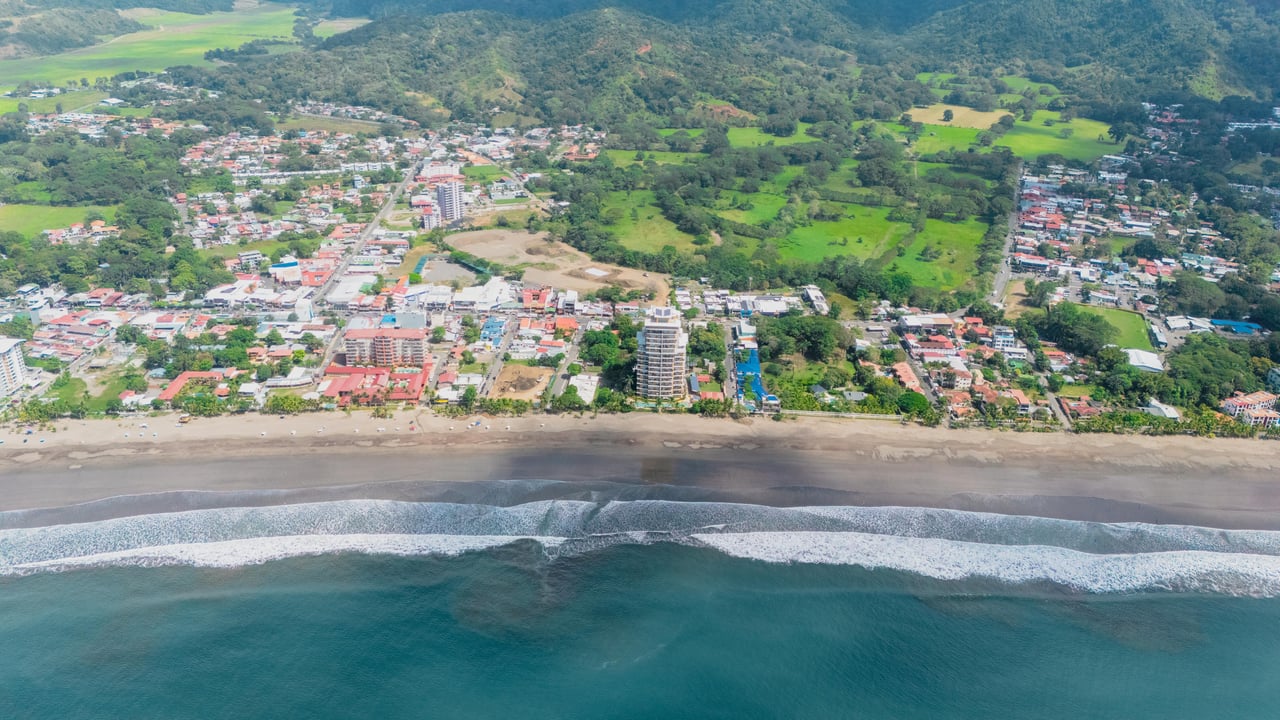
Beachfront Property in Costa Rica — What You Must Know About Titled Property and the Maritime Zone Law
Imagine waking up to the sound of the Pacific just steps from your door. Howler monkeys calling from the tree line. A scarlet macaw gliding past your infinity pool. For thousands of international buyers, beachfront property in Costa Rica represents the ultimate dream — and the Central Pacific coast, anchored by Jacó and Playa Hermosa, is where many of them make it a reality.
But here's what most buyers don't know before they start searching: owning beachfront property in Costa Rica is not like owning beachfront property in the United States, Canada, or Europe. There's a specific body of law governing the first 200 meters from the ocean that every buyer must understand before falling in love with a property — and certainly before signing anything.
This guide will walk you through everything you need to know about the Maritime Zone Law, how it affects your purchase, what risks to watch for, and how experienced buyers navigate it successfully.
What Is the Maritime Zone Law?
The Ley sobre la Zona Marítimo Terrestre (Law No. 6043), passed in 1977, governs all land within 200 meters of the high-tide line on every ocean beach in Costa Rica. It divides this 200-meter strip into two distinct zones:
The Public Zone — First 50 Meters
The first 50 meters from the high-tide line is inalienable public land. No one owns it. No one can own it. It cannot be privatized, sold, mortgaged, or transferred under any circumstances. This strip is open to all Costa Ricans and visitors by law, which is why you'll never see a hotel or residence built right on the sand in Costa Rica. This zone is protected in perpetuity.
The Restricted Zone — Next 150 Meters
The following 150 meters — from 50 to 200 meters from the high-tide line — is what's known as the restricted zone or the zona marítimo terrestre. This land is owned by the Costa Rican government and administered by the municipality of each district.
Within this restricted zone, the government may grant concession licenses to individuals or corporations, allowing them to use the land for residential or commercial purposes. However, a concession is not the same as ownership — you are essentially leasing the right to use that land from the government.
Titled Property vs. Concession Property — The Critical Difference
This is the most important distinction in Costa Rican beachfront real estate, and it's one that surprises many first-time buyers.
Titled (fee simple) property is registered in the National Registry (Registro Nacional) and grants you full ownership rights — you own the land outright, just as you would in any other country. You can sell it, mortgage it, leave it to your children, and hold it indefinitely. The vast majority of properties in Jacó's town center, hillside neighborhoods, and communities set back from the beach fall into this category.
Concession property means you hold a government-granted license to use land within the restricted maritime zone. You do not own the underlying land — the municipality does. What you own is the concession license, which includes the structures and improvements built on the land.
Both types of property can be perfectly legitimate and excellent investments. But they require very different levels of due diligence and carry different risk profiles.
What Are the Risks of Concession Property?
Understanding the risks doesn't mean avoiding concession properties — some of the most spectacular beachfront homes and resorts in Costa Rica sit on concession land. It means approaching them with the right knowledge and the right legal team.
1. Concessions Expire and Must Be Renewed
Most concession licenses are granted for 5 to 20 years and must be renewed by the municipality. While renewals are generally granted for legitimate, well-maintained concessions, there is no absolute guarantee. Municipalities have the authority to deny renewal or modify the terms.
2. Non-Residents Face Ownership Restrictions
This is crucial for foreign buyers. Non-resident foreigners cannot hold a concession in their personal name. To hold beachfront concession property, a foreigner who has not established legal residency in Costa Rica for at least five years must hold the concession through a Costa Rican corporation (S.A. or S.R.L.). The corporation structure is well established and widely used, but it adds legal complexity and ongoing compliance requirements.
Even then, there are municipalities where foreign corporate ownership of concessions is restricted or subject to additional scrutiny. Always have your attorney verify the specific municipality's rules before proceeding.
3. Some Concessions Are Not Legally Transferable
Not all concessions can be bought and sold freely. Some are subject to municipal approval for transfer, meaning a seller cannot simply pass the concession to you at closing without the municipality's blessing. If the municipality declines to approve the transfer — or delays for months — your deal can fall apart or stall indefinitely.
4. Irregular and Unconcessed Land
Perhaps the most dangerous risk of all: some beachfront properties being marketed and sold in Costa Rica are not legally concessed at all. They are occupied informally, without any valid legal title or concession — what locals sometimes call "precario" land. Buyers who purchase these properties have no legal standing and risk losing everything.
This is not a hypothetical risk. It has happened to uninformed buyers, often those who skipped proper legal due diligence to save time or money.
5. Municipal Regulatory Differences
Costa Rica has over 80 municipalities, and each one administers maritime zone concessions differently. What's permitted in Jacó's Garabito municipality may not be the same as what's permitted in nearby Parrita. Building setbacks, permitted uses, density rules, and transfer procedures vary. Local expertise is essential.
What Does a Good Concession Look Like?
A well-structured, legally sound beachfront concession in Costa Rica will have all of the following:
- A valid, active concession registered with the municipality — not expired, not in dispute, not under review
- A current Catastro (survey) map matching the physical property and the concession boundaries
- No outstanding municipal fees or taxes — unpaid fees can cloud the concession status
- A clear history of compliance — no environmental violations, unpermitted construction, or regulatory actions
- An approved transfer mechanism — the municipality has either pre-approved transfers or has a clear process for doing so
- Structures with proper building permits — construction within the maritime zone requires specific municipal permits; unpermitted structures can be ordered demolished
A qualified Costa Rican real estate attorney will verify all of the above during the due diligence process.
The Areas Around Jacó — What You'll Find
The Central Pacific coast — Jacó, Playa Hermosa, Herradura, and Esterillos — has a mature, well-documented concession environment compared to many other parts of Costa Rica. Decades of tourism and real estate development mean that many properties in the area have established concession histories.
That said, the landscape varies significantly:
Jacó Beach — Jacó is one of the very few coastal areas in Costa Rica where beachfront properties can be fully titled fee-simple land. This is a significant and rare advantage. Unlike most of the country's coastline, where beachfront automatically falls into concession territory, Jacó has a number of directly beachfront properties registered in the National Registry with full ownership rights — making it an exceptional destination for buyers who want true beachfront ownership without the legal complexity of a concession. This is one of the things that makes Jacó uniquely attractive in the Costa Rica market. That said, not every property marketed as "beachfront" in Jacó is titled — always have your attorney confirm the status of the specific property you're considering.
Playa Hermosa — Hermosa's beachfront properties are predominantly concession land. Given Hermosa's World Surfing Reserve designation and strict development controls, the concession landscape here requires particularly careful review. However, many well-established properties have solid concession histories.
Herradura / Los Sueños — The Los Sueños Resort development is one of the most legally organized private communities in Costa Rica, with its own rigorous infrastructure. Properties within Los Sueños typically have very clear legal structures. The surrounding Herradura Bay area has a mix of titled and concession properties.
Esterillos — A quieter market with a mix of titled inland properties and beachfront concessions. Less developed means less legal infrastructure — even more reason to engage a thorough attorney.
Can Foreigners Ever Own Beachfront Property Outright?
Yes — and Jacó is one of the best places in Costa Rica to do exactly that.
1. Jacó's titled beachfront — a rare and valuable exception. Jacó is one of the very few coastal areas in all of Costa Rica where true beachfront properties exist as fully titled, fee-simple land registered in the National Registry. This means a foreign buyer can own a beachfront property in Jacó outright — in their personal name or through a corporation — with the same full legal rights as any other titled property in the country. No concession license. No municipal renewal risk. No transfer restrictions. This is genuinely rare on the Costa Rican coast and is one of the defining advantages Jacó holds over almost every other beach destination in the country.
2. Titled ocean-view property set back from the 200-meter line. Throughout the Central Pacific, there are also spectacular ocean-view homes, hillside villas, and properties with beach access that sit outside the maritime zone entirely — fully titled with no concession complications. These are available across Jacó, Playa Hermosa, Herradura, and beyond.
3. Through a corporation for concession land. Where concession land is involved, non-resident foreigners can hold the concession through a properly structured Costa Rican corporation — a well-established, legal approach used by hundreds of foreign property owners throughout the country.
For buyers who want the ultimate in legal simplicity and ownership security, Jacó's titled beachfront properties represent one of the most compelling opportunities in Central American real estate — combining true beachfront ownership with the town's outstanding accessibility, amenities, and rental market.
How to Buy Beachfront Property Safely in Costa Rica
The good news is that with the right team and proper due diligence, beachfront property in Costa Rica is a safe, rewarding investment. Here's the framework:
Step 1 — Work with an experienced local agent who understands the specific concession landscape of the area you're buying in. This isn't the time to use an agent who primarily works in a different market.
Step 2 — Engage a qualified Costa Rican real estate attorney before making any offer. Your attorney should specialize in maritime zone transactions, not just general real estate.
Step 3 — Demand a full title and concession search as part of due diligence. This includes the National Registry, the municipal concession register, the Catastro, and environmental records.
Step 4 — Verify the transfer mechanism before signing a purchase agreement. Confirm that the municipality will approve the transfer of the concession to you (or your corporation) before committing funds.
Step 5 — Use escrow for all fund transfers. Never wire money directly to a seller. A reputable escrow company holds your deposit until the transaction closes cleanly.
Step 6 — Get everything permitted. If you plan to renovate or build, ensure all work goes through the municipal permit process. Unpermitted construction in the maritime zone can be ordered removed at the owner's expense.
Frequently Asked Questions
Can I build a house on beachfront concession land? Yes, with the proper municipal construction permit. Building within the maritime zone requires specific approvals beyond a standard building permit. Work with an architect and attorney who know the local municipal requirements.
What happens to my concession if I sell? The concession transfers to the buyer, subject to municipal approval. The transaction is documented through a formal deed transfer registered with both the municipality and the National Registry.
Is concession property worth less than titled property? Not necessarily — premium beachfront concession properties command premium prices. However, all else being equal, buyers typically pay a slight premium for the legal simplicity of titled property. The value of a concession depends heavily on its remaining term, transferability, and the quality of the improvements.
Can I get a mortgage on a concession property? Financing concession properties is more complex than titled properties. Costa Rican banks are generally more cautious about lending on concession land. Developer financing and international financing are more common paths for buyers in this category.
What is the annual cost to hold a concession? Concession holders pay a municipal canon (usage fee) calculated as a percentage of the appraised value of the land. Fees vary by municipality and concession classification but are generally modest compared to North American property taxes.
Ready to Explore Beachfront Properties in Jacó and the Central Pacific?
Navigating beachfront property in Costa Rica requires local knowledge that only comes from years of experience in the specific market. Daphne and Brooke Rochester at Pacific Properties have been guiding international buyers through beachfront and ocean-view transactions on the Central Pacific coast for over 30 years.
We know which properties in Jacó carry full title directly on the beach — one of the rarest opportunities in all of Costa Rica — and which areas have the strongest long-term fundamentals. We'll connect you with the right attorneys and surveyors and guide you through every step of due diligence. Whether you're looking for a truly titled beachfront property, an ocean-view villa, or a premium concession, we'll help you find it and close it with confidence.
📞 Call or WhatsApp Brooke: (506) 8718-5591 📞 Call or WhatsApp Daphne: (506) 6286-7556 📧 Email us: [email protected]
Browse beachfront and ocean-view properties in Jacó →
Read our complete guide to buying property in Costa Rica as a foreigner →
Pacific Properties Luxury Real Estate — Pastor Díaz Ave, Jacó, Puntarenas, Costa Rica. Specialists in beachfront, ocean-view, and luxury properties on the Central Pacific coast.
This article is intended as general educational content and does not constitute legal advice. The Maritime Zone Law is complex and municipality-specific. Always consult a qualified Costa Rican real estate attorney before purchasing any beachfront or concession property.